Where we live in Chicago’s North Shore and Northwest suburbs, it is not a question of if the power goes out, it’s when. We have too much hot weather, cold weather, heavy winds and torrential rains to avoid it. And when the power does go out, here is what is at risk:
- Loss of power to life-preserving medical devices
- Spoiled food
- Flooding from sump pump failures or frozen pipes
- Failure of home security systems and lighting
- Lack of comfort from furnaces and ACs not working
- Inconvenience – no functioning garage doors, no cooking, working, watching TV, etc.
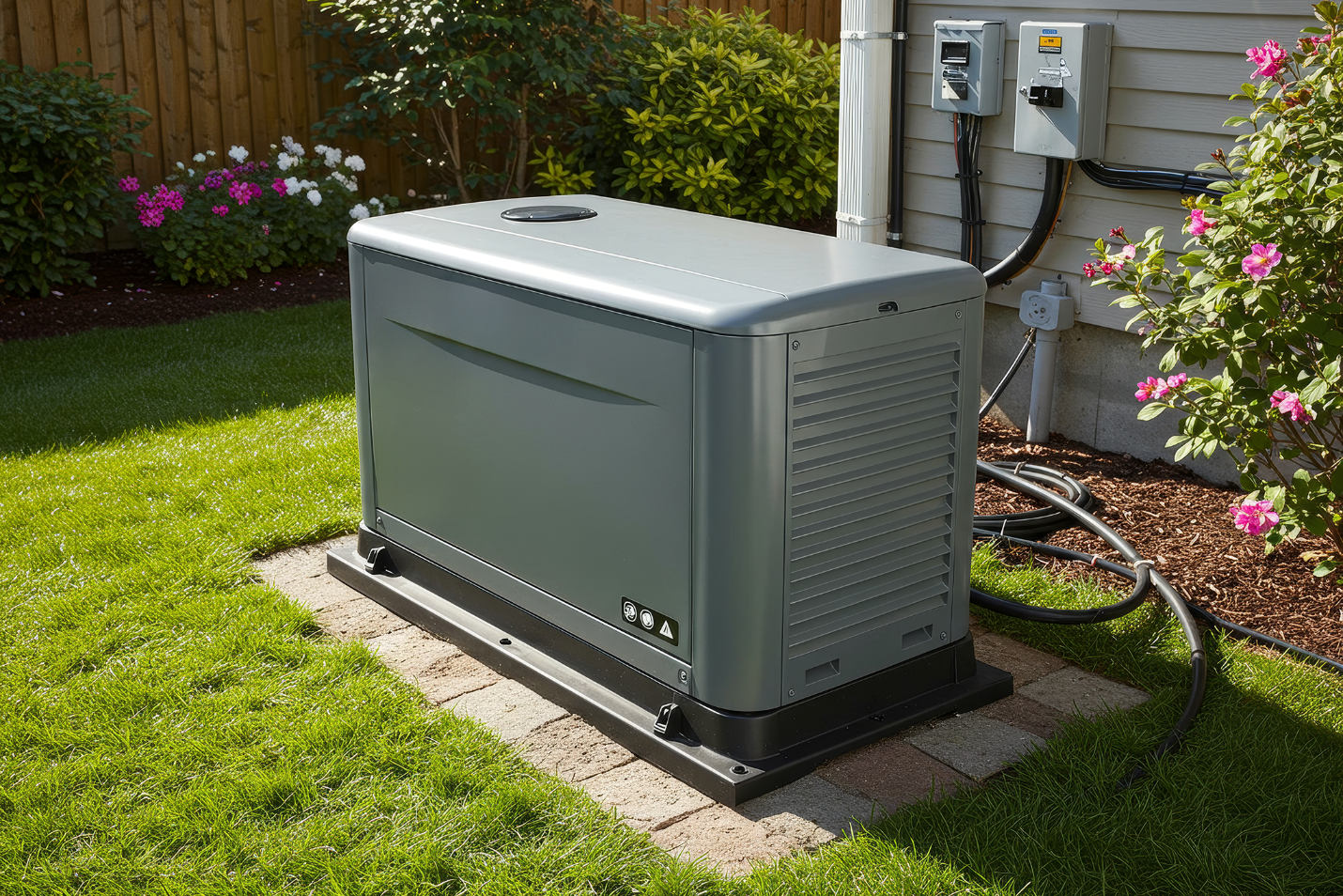
For all these reasons, it makes sense to have a standby generator at the ready; As discussed previously, a standby generator turns on automatically and powers the entire home. That is better than a portable generator, which you must turn on manually and only powers certain areas.
Given that, what should you look for in a standby generator. Here are seven tips.
1. How Much Power Do You Need?
Here are the ranges for some of the most essential items you need to keep running.
| Item | Wattage |
| Air conditioner | 2,000-5,000 |
| Dryer | 2,000-6,000 |
| Water heater | 4,000-5,000 |
| Microwave | 700-1,500 |
| Refrigerator | 500-1,000 |
| Sump pump | 800-1,000 |
| Toaster oven | 1,000-1,200 |
| Television | 50-300 |
| Space heater | 700-1,500 |
| Washing machine | 500-1,200 |
2. How Do You Power?
There are three types of fuels used to power generators.
- Natural gas-powered generators make the most sense if you have a gas line coming into your home. The generator connects to the fuel line so you will never run out of fuel. A natural gas-powered generator will provide up to 26,000 watts of power, which is more power than the maximum power requirements of the items above.
- Propane-powered generators also provide up to 26,000 watts of power. The problem: you get the propane in a tank, and the propane will run out. So, you need a second tank. And if you are not home when the first tank runs out, you will be literally powerless.
- Diesel-powered generators are very expensive and provide much more power than needed for a typical residence. They are more appropriate for commercial and industrial settings.
Also, it’s not really a fuel, but some generators use solar power to generate power from the sun. It’s free and eco-friendly but make sure you have some type of backup in case the solar panels cannot generate power.
3. Don’t Forget the Transfer Switch
The transfer switch connects the standby generator to the electric control panel via a cable. Some generators come with them. Either way, make sure you have an automatic transfer switch which turns on automatically when the power goes out.
4. Noise
Generators make noise and there is no way to avoid it. Decibel levels range from 50 decibels to as high as 100 decibels. While noise should not be a primary purchase factor, all things being equal, opt for the quieter model.
5. Location, Location, Location
Even the quietest generators make some noise. So, try to locate the generator as far as possible from your house, as well as your neighbors’ homes
6. Enclosure
As the standby generator will be outside, you will want an enclosure that will last. Aluminum and composite enclosures do the best job.
7. Remote Monitoring.
Make sure you or your electrical contractor can monitor the generator’s performance and adjust settings remotely.
Contact Ravinia Plumbing for a Standby Generator
Ravinia Plumbing, Sewer, Heating & Electric’s knowledgeable and licensed electricians can help you select and then install the standby generator right for you. Our customers have relied on us since 1928 (that’s 98 years!) for quality products, knowledgeable technicians, and superior service, including 24/7/365 emergency service. That is why we are the most trusted plumbing, sewer, heating and air conditioning, and electrical company in Chicago’s North Shore and Northwest suburbs. Contact us today to schedule an appointment.